August 3, 2026 · Nairobi, Kenya

Kanyi Mwangi

WordPress Developer & Product Designer

Available for contract work

WordPress that survives
the handover.

Five years of WordPress, on top of five years building for the web. Custom themes, Gutenberg block themes, and multilingual platforms for growing businesses, from Figma through to production PHP, designed and built by one person.

Trusted By
N° 01

A partner, not a one-off build

We contracted Kanyi to build and maintain WordPress websites for our clients, alongside email security integration. He delivered cleanly, consistently, and always kept things running without issues. A reliable partner for any WordPress project.

Impact Hub Nairobi
Joy M., Project Manager

Still supported, months later

Kanyi has been incredibly supportive and helpful throughout the entire process. He understood exactly what I wanted for my website and brought that vision to life. Even months after completing the website, he has continued to offer support whenever I've needed it.

Solutions for Somalia
Ayaan A.

A platform their team can run

Kanyi built and managed our WordPress platform covering events, registrations, and team communication. The site reflects who we are and has made coordinating across our ministries noticeably simpler. We have not had to worry about the website since he set it up.

Wonder Workers
Josiah G., Administrator
Selected Work
N° 02

Case studies

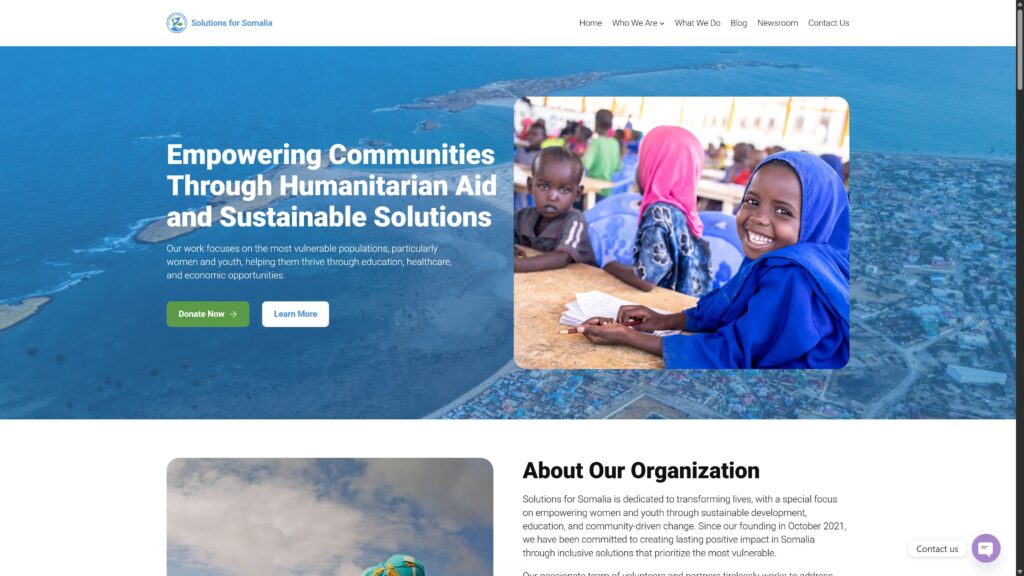
Solutions for Somalia: A Block Theme a Non-Profit Team Can Run

Solutions for Somalia: A Block Theme a Non-Profit Team Can Run

WordPress Block Theme

WordPress Developer & Product Designer

Who It Serves: A humanitarian organisation in Mogadishu working across four programme areas, publishing to donors, volunteers, partners, and the communities it serves.

Design to Build: Designed in Figma, then translated into a block theme built entirely in Gutenberg. The design was made to become patterns from the start, so what was drawn and what the editor can actually produce are the same thing.

What They Can Do Now: Programmes, newsroom, blog, volunteer, and donation pages all maintained in-house, with new content composing from patterns that already match rather than needing a developer.
Read the case study →
A Multilingual Platform for an Email Security Product

A Multilingual Platform for an Email Security Product

WordPress Custom Theme

WordPress Developer & Product Designer

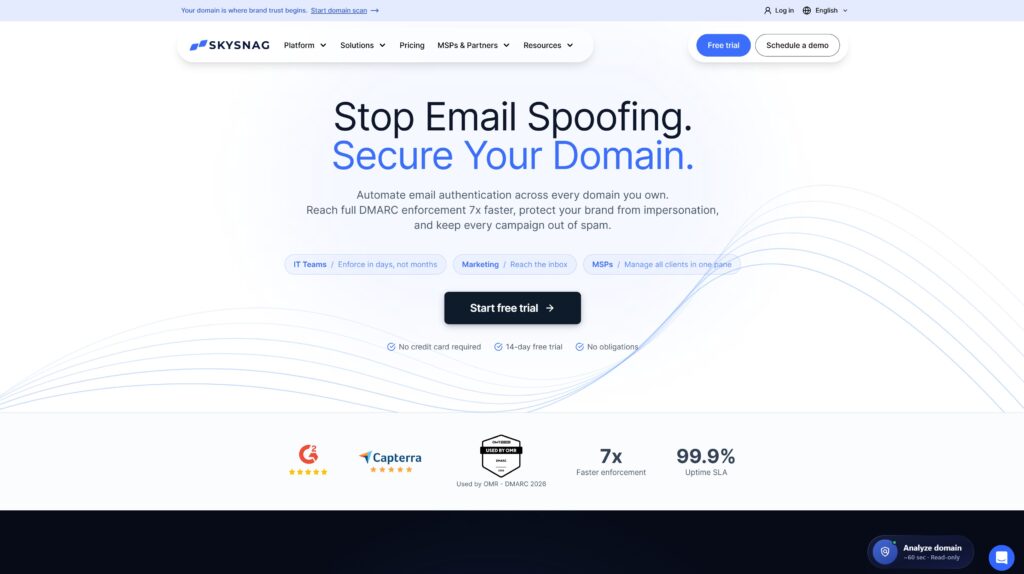
Scope: Four years owning the WordPress side of an email security product, the marketing site that fed the SaaS behind it.

Build: A custom WordPress theme in PHP across five languages, technical SEO, and an email scanner that pipes users to the SaaS sign up

Read the case study →
Wonder Workers Ministry: Turning a Generic Blog into a Mission-Driven Platform

Wonder Workers Ministry: Turning a Generic Blog into a Mission-Driven Platform

WordPress Custom Theme

WordPress Developer & Product Designer

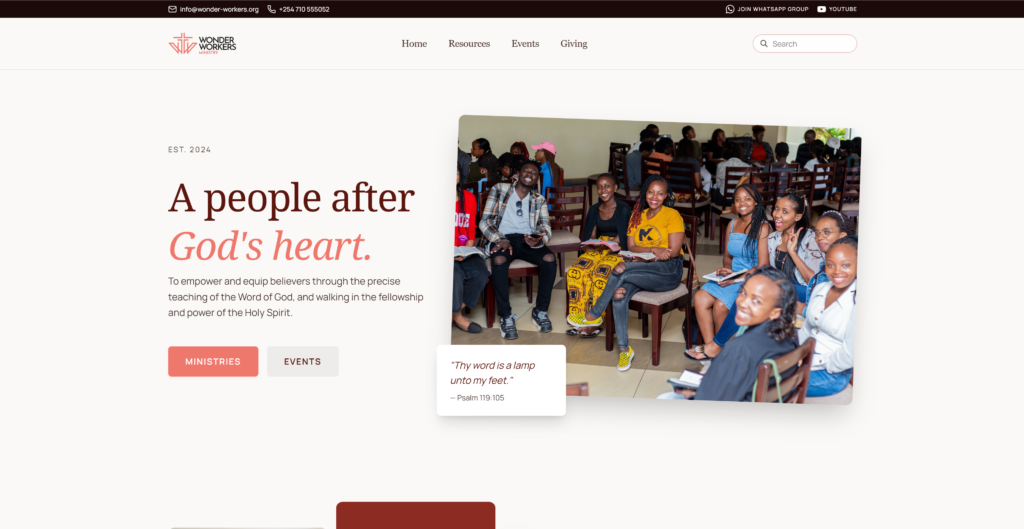
Strategy: Identified three distinct user groups and rebuilt the navigation and content structure around what each of them came to do.

Execution: Built a custom theme with PHP and reusable Gutenberg blocks so the ministry team manages content without developer involvement.

Impact: Ministries, events, and giving now reachable in a single click, serving a community of around 400 people across virtual calls, in-person gatherings, and large events.

Read the case study →
How I Work
N° 03

Three lenses on every engagement

Product, implementation, and growth: the same three lenses applied to every project, from first brief to live product.

01

Product

Every WordPress project starts with one decision that shapes everything that follows. What kind of build does this actually need? Getting that right at the start saves weeks of work later.

This means deciding between a custom theme, a Gutenberg block theme, or a plugin extension, based on what the project actually requires, not what is easiest to reach for. And it means writing down what the build is assuming, so there is something to check against once it is live.

Figma · Miro · Notion · Content Modelling

02

Implementation

The code is the easy part. The harder question is what the client will be able to change six months after handover, and that is decided by how the content is structured, not by how the templates look.

This means modelling content before writing markup: post types and fields that match how the team actually works, block patterns that keep layouts consistent without locking editors out, and a build that holds up when someone pastes in something unexpected.

PHP · JavaScript · React · ACF · WP-CLI · Git

03

Growth

A brief is a set of assumptions about what people will do. Once the site is live, those assumptions are testable: which pages carry the weight, where the journey breaks, whether the structure that made sense in planning survives contact with real use.

This means going back to what the build assumed and checking it against what is actually happening, then changing the content, the structure, or the page itself. Not monitoring for its own sake, but treating the live site as the first real evidence about whether the product decision was right.

GA4 · Search Console

Capabilities
N° 04

Skills Index

An honest map of core strengths and balanced proficiency, so you know exactly where I lead and where I collaborate.

Tier 01

Core Strengths

Deeply ingrained disciplines where my proficiency is mature and execution is seamless.

WordPress Development

PHP, custom themes, block themes, custom plugins, REST API, WP-CLI. Primary and strongest framework.

Product Design

Figma, wireframes through high-fidelity, design systems and component libraries, developer-ready handoff.

Frontend Engineering

React, HTML, CSS, JavaScript, Tailwind. Component architecture and state, headless and hybrid WordPress.

API Integration

Connecting frontend interfaces to backend APIs across live commercial products including security scanning tools.

Technical SEO

Sitemaps, schema, hreflang, multilingual SEO infrastructure built into the WordPress theme layer.

Multilingual Infrastructure

WPML, translation workflows across five languages, multilingual content management at production scale.

Tier 02

Balanced Proficiency

Areas of active application where I balance technical depth with creative agility.

Application Backends (Laravel)

Applications and data models in Laravel, scoped separately from WordPress theme and plugin work. Comfortable building here, with collaboration on the most complex server-side architecture.

Analytics & Measurement

GA4 and Search Console. Instrumenting live builds against the goals in the brief and using the data to guide content and structure changes, currently in practice on an active client platform.

Motion Design

SVGator, Cavalry. Animation for web and product interfaces.

Data Visualisation

D3.js. Charts, dashboards, and data-driven interfaces.

Currently Learning

The craft does not stand still and neither do I. Right now I am deepening my knowledge of CI/CD pipelines for WordPress deployment workflows and expanding my understanding of authentication systems within WordPress, building on a strong foundation to go further in how modern WordPress products are architected and shipped.

Where I Operate
N° 05

From business problem to live product

A full-stack process, from defining the problem through to improving the live product.

01

Product

Discovery & Research

Defining the business problem and mapping the people it affects, before any solution is considered.

02

Product

Content Modelling

Working out what the content actually is: the types, the relationships between them, and who edits what. This is where the build decision gets made: block theme, custom theme, or plugin, because the content model is what determines it.

03

Product

UX & Information Architecture

Turning the content model into navigation and user flows: how people find things, and what path the site is asking them to take.

04

Product

UI & Design System

Designing the interface, then reducing it to a system: colour, type scale, spacing, and the patterns that repeat. In WordPress that system becomes theme.json and a block pattern library, so the design holds together when the client starts editing.

05

Implementation

Theme Development

Block themes, templates, and custom blocks, built from the design system so the editor and the front end stay in agreement.

06

Implementation

Plugin & Integration Development

Custom post types, admin interfaces, and third-party connections: payment gateways, CRM hooks, multilingual support, external APIs. Functionality lives in plugins, not the theme, so it survives the next redesign.

07

Implementation

Launch Readiness

Preparing the site for production: SEO configuration, performance and Core Web Vitals, accessibility checks, and a deployment process that does not depend on FTP.

08

Growth

Analytics & Instrumentation

Setting up measurement that maps to the goals from the original brief, so the data answers questions someone actually asked.

09

Growth

Iteration

Going back to what the build assumed and checking it against what people are doing, then changing the content, the structure, or the page itself.