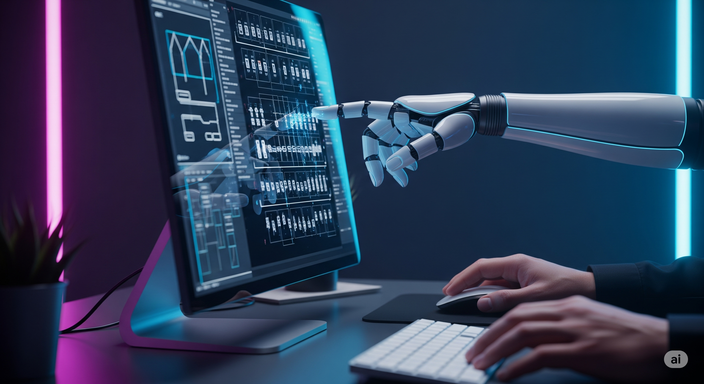
The world of product design is on the cusp of a monumental shift, driven by the rapid advancements of artificial intelligence. What was once the subject of science fiction—AI as a creative partner—is now becoming a practical reality within our design tools. For businesses looking to maintain a competitive edge, the question is no longer if they should adopt AI, but how they can leverage it to innovate faster.
The greatest barrier to innovation is often the sheer volume of manual, repetitive work that consumes a designer’s day. Creating dozens of component variations, populating mockups with realistic data, and meticulously documenting specifications are all essential tasks, but they are a drain on a company’s most valuable resource: human creativity.
This is where Figma’s burgeoning AI capabilities are changing the game. By automating the mundane, AI is not replacing designers, but empowering them to become more strategic, creative, and impactful than ever before.
Your New Co-Pilot: Practical AI in the Design Workflow
AI in Figma isn’t about a single “magic button.” It’s an ecosystem of intelligent features and plugins that streamline workflows and augment a designer’s abilities.
- Automating Tedious Production Work: Imagine designing a user profile card and then having AI instantly generate dozens of variations for different user types, screen sizes, or content lengths. AI-powered tools can automate the creation of component variants, suggest optimal layouts, and populate entire designs with realistic placeholder data (names, addresses, images), saving hours of tedious setup.
- Intelligent Developer Handoff: The bridge between design and code is being rebuilt by AI. Advanced tools can now analyze a finished Figma design and generate clean, production-ready code for popular frameworks like React, SwiftUI, or Vue. This goes far beyond simple code inspection; it’s intelligent code generation that dramatically reduces the time and potential for error in translating a design into a functional product.
- Smarter and More Maintainable Design Systems: AI is becoming an essential partner in managing the complexity of large-scale design systems. It can automatically audit a system to find and flag inconsistencies, analyze usage patterns to suggest improvements, and even help automate the writing of component documentation, ensuring the system remains a reliable and efficient resource.
The Business Case: Shifting from Production to Strategic Impact
Integrating AI into the design process isn’t just about making things faster; it’s about fundamentally elevating the value of design within the organization.
- Exponentially Increased Velocity: By offloading repetitive tasks to AI, the time required to move from an initial concept to a high-fidelity, testable prototype is drastically reduced. This acceleration of the design cycle means a faster time-to-market and the ability to out-pace competitors.
- Elevating Designers to Strategic Partners: When designers are freed from the drudgery of production work, they can dedicate their expertise to the activities that drive the most business value. This means more time spent on user research, defining product strategy, facilitating cross-functional workshops, and solving complex, high-level business challenges. The designer evolves from a producer of assets to a key strategic thinker.
- Unlocking New Creative Potential: AI can serve as an incredible brainstorming partner. It can generate hundreds of design ideas and variations in seconds, pushing past conventional solutions and helping designers explore territories they may not have considered. This human-AI partnership can lead to breakthrough innovations that define market leadership.
The Future-Ready Designer
The future of design doesn’t belong to those who fear being replaced by AI, but to those who learn to partner with it. The most valuable designers in the coming years will be those who can skillfully orchestrate these powerful new tools to amplify their own strategic and creative capabilities.
A designer who actively explores and leverages AI in Figma demonstrates foresight, adaptability, and a relentless focus on delivering business value. They aren’t just keeping up with trends; they are equipped to build the next generation of products and drive the future of innovation.